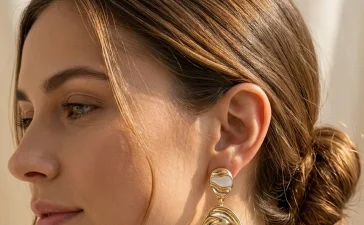


Minimalist wardrobes are built around intention, clarity, and versatility. Every garment earns its place through usefulness and adaptability. Jewelry, however, is where personality quietly enters the picture. When styled thoughtfully, even a small collection of accessories can expand outfit combinations, refine silhouettes, and introduce subtle expression without disrupting a streamlined aesthetic.
This guide explains how to integrate jewelry into a minimalist wardrobe framework so that each piece supports consistency, flexibility, and understated elegance.
Understanding the Role of Jewelry in a Minimalist Wardrobe
Minimalist dressing is not about owning fewer things simply for the sake of reduction. It is about selecting items that work together harmoniously. Jewelry functions as a visual anchor within this structure.
Instead of acting as decoration alone, minimalist jewelry should:
- Reinforce your wardrobe’s color palette
- Complement fabric textures
- Support outfit repetition without appearing repetitive
- Transition easily between casual and formal settings
- Express personality without overwhelming the outfit
The goal is cohesion rather than accumulation.
Building a Core Jewelry Capsule
A minimalist jewelry capsule mirrors the logic of a clothing capsule. Each piece should coordinate with multiple outfits and serve multiple styling roles.
A strong foundation typically includes:
Essential earrings
- Small hoops
- Stud earrings in gold, silver, or pearl
- One slightly structured geometric pair
Necklaces
- A short chain necklace
- A medium-length pendant
- A layering-friendly longer chain
Bracelets
- One slim cuff
- One delicate chain bracelet
Rings
- One signature ring
- One stacking ring set
These pieces create dozens of combinations without cluttering your styling decisions.
Choosing the Right Metal Tone for Your Wardrobe Framework
Consistency in metal tone strengthens visual harmony across outfits.
Most minimalist wardrobes benefit from selecting one dominant metal:
- Gold for warmth and softness
- Silver for cool precision
- Mixed metals for modern versatility when done intentionally
Consider your clothing palette when choosing:
Warm wardrobes pair well with
- Cream
- Camel
- Olive
- Rust
- Chocolate brown
Cool wardrobes pair well with
- Black
- White
- Gray
- Navy
- Charcoal
Once you establish a primary metal tone, keep secondary metals minimal and purposeful.
Matching Jewelry Scale to Clothing Silhouettes
Minimalist styling relies heavily on proportion. Jewelry scale should align with garment structure.
With tailored silhouettes
Choose:
- Structured hoops
- Clean cuffs
- Linear pendants
These reinforce crisp lines.
With relaxed silhouettes
Choose:
- Soft chains
- Rounded studs
- Slim layering necklaces
These maintain flow without adding visual tension.
Avoid oversized statement pieces unless they replace multiple smaller accessories entirely.
Creating Visual Interest Without Excess
Minimal wardrobes depend on subtle contrast rather than bold decoration. Jewelry can introduce this contrast through texture and shape rather than size.
Effective minimalist contrasts include:
- Matte metal with smooth cotton
- Polished metal with wool
- Slim chains over structured collars
- Geometric studs with fluid fabrics
These combinations keep outfits engaging without breaking visual simplicity.
Mastering Jewelry Layering in a Minimalist System
Layering works best when guided by restraint.
Follow three layering principles:
Vary lengths, not styles
Choose necklaces with different drop levels but similar metal tones.
Limit stacking categories
Stack rings or bracelets, not both simultaneously.
Keep spacing intentional
Allow breathing room between layers so each piece remains visible.
A typical minimalist necklace layering structure includes:
- One collar-length chain
- One mid-length pendant
- One longer accent chain
This structure works with most necklines.
Aligning Jewelry With Outfit Repetition
Minimalist wardrobes rely on outfit repetition as a strength rather than a limitation. Jewelry prevents repetition from feeling predictable.
For example:
A white shirt worn multiple times can feel completely different when paired with:
- Stud earrings and a cuff bracelet
- Small hoops and layered chains
- A pendant necklace and stacking rings
The clothing remains constant while the styling evolves.
This is where jewelry becomes a strategic styling tool rather than an accessory afterthought.
Selecting Signature Pieces That Define Personal Style
Every minimalist wardrobe benefits from one or two signature accessories.
These pieces act as identity markers within a restrained wardrobe.
Examples include:
- A sculptural ring worn daily
- A slim chain with a symbolic pendant
- A modern cuff bracelet
- Minimalist pearl studs
Signature pieces reduce decision fatigue while reinforcing consistency.
They also make simple outfits instantly recognizable as intentional rather than plain.
Coordinating Jewelry With Necklines
Neckline alignment dramatically improves styling cohesion.
Crew neck tops
Best paired with:
- Short pendants
- Collar-length chains
- Structured chokers
V-neck tops
Best paired with:
- Drop pendants
- Layered chains following the neckline angle
Button-down shirts
Best paired with:
- Minimal studs
- Slim chains tucked slightly inside the collar opening
Turtlenecks
Best paired with:
- Longer pendants
- Statement cuffs instead of necklaces
Matching jewelry shape to neckline geometry keeps styling balanced and refined.
Using Jewelry to Transition Between Occasions
Minimalist wardrobes often prioritize pieces that work across environments. Jewelry helps shift outfits from casual to formal without changing clothing entirely.
For daytime styling:
Choose:
- Stud earrings
- Slim bracelets
- One simple chain
For evening styling:
Switch to:
- Hoop earrings
- Layered necklaces
- A structured cuff
These adjustments create a polished shift with minimal effort.
Maintaining Visual Balance Across the Outfit
Minimalist styling depends heavily on visual distribution.
Avoid placing all jewelry in one area of the body.
Instead:
- Pair earrings with a bracelet
- Pair a necklace with rings
- Pair cuffs with studs
Balanced placement prevents the outfit from feeling incomplete or overloaded.
Think of jewelry as punctuation rather than decoration.
Incorporating Texture Into a Neutral Wardrobe
Neutral wardrobes benefit especially from jewelry variation.
Texture becomes essential when color contrast is limited.
Useful minimalist textures include:
- Brushed metal
- Hammered finishes
- Smooth polished surfaces
- Fine chain links
- Minimal pearl accents
These textures create subtle dimension without introducing visual noise.
Organizing Jewelry for Daily Efficiency
Accessibility supports consistency.
Store your jewelry in a way that reflects how you dress each day.
Helpful organization methods include:
- Keeping daily pieces together in one tray
- Separating layering necklaces by length
- Storing signature items in visible placement
- Rotating seasonal pieces into storage
A visible system encourages regular use and prevents unnecessary accumulation.
Avoiding Common Minimalist Jewelry Styling Mistakes
Even small styling missteps can disrupt a minimalist framework.
Common issues include:
Over-layering
Too many pieces weaken clarity.
Mixing unrelated styles
Minimalist and ornate pieces rarely harmonize well together.
Ignoring proportion
Oversized accessories can overpower streamlined outfits.
Changing metals too frequently
Consistency strengthens visual identity.
A disciplined selection approach protects the integrity of your wardrobe system.
Seasonal Adjustments for Minimalist Jewelry
Minimalism adapts rather than stays static.
Seasonal jewelry shifts can include:
Spring and summer
- Slim chains
- Smaller earrings
- Lighter finishes
Fall and winter
- Slightly heavier cuffs
- Textured metals
- Longer pendants over layered clothing
These changes maintain freshness without expanding your collection unnecessarily.
FAQ Section
How many jewelry pieces should a minimalist wardrobe include?
Most minimalist wardrobes function effectively with 10 to 15 versatile jewelry items that coordinate across multiple outfits and occasions.
Can minimalist wardrobes include statement jewelry at all?
Yes. One or two intentional statement pieces can work well if they replace several smaller accessories rather than adding to them.
Should minimalist jewelry always match clothing colors?
Not necessarily. Jewelry should complement the overall palette, but contrast can be effective when used sparingly and intentionally.
Is mixing gold and silver appropriate in minimalist styling?
Mixing metals can work if done consistently. Repeating both tones across multiple outfits helps maintain cohesion.
What is the best jewelry choice for travel with a minimalist wardrobe?
Select a compact capsule including studs, small hoops, one pendant necklace, one cuff bracelet, and one signature ring.
How can minimalist jewelry reflect personality without appearing decorative?
Choose pieces with meaningful shapes, subtle symbolism, or distinctive textures that align with your aesthetic preferences.
Does minimalist jewelry need to be expensive to look refined?
No. Simplicity, proportion, finish quality, and consistency matter more than price when creating a polished minimalist jewelry framework.