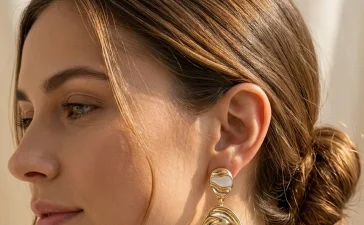


Emerging designer jewelry is reshaping how people understand adornment. Instead of focusing only on decoration or status, many new designers treat jewelry as a language of ideas. Shapes, materials, textures, and construction methods often carry layered meanings connected to identity, memory, heritage, sustainability, or transformation. As a result, symbolism has become one of the defining characteristics of contemporary independent jewelry lines.
Understanding symbolism in these collections helps wearers engage more intentionally with what they choose to wear. Jewelry becomes less about trends and more about expression, storytelling, and connection.
Why Symbolism Matters in Contemporary Jewelry Design
Symbolism has always existed in jewelry, but emerging designers approach it differently than traditional luxury houses. Rather than repeating established motifs, many newer creators reinterpret symbols through personal narratives and modern cultural perspectives.
Today’s symbolic jewelry often reflects:
- Individual identity
- Emotional milestones
- Cultural hybridity
- Environmental awareness
- Social commentary
- Spiritual curiosity
- Architectural influence
These layers make jewelry feel relevant to modern life rather than tied exclusively to heritage conventions.
The Shift From Ornament to Meaning
Historically, jewelry communicated status, lineage, and wealth. While those associations still exist, emerging designers often prioritize storytelling instead.
This shift appears in several ways:
- Concept-driven collections rather than seasonal trend cycles
- Sculptural forms inspired by experience instead of tradition
- Materials selected for symbolism rather than rarity alone
- Personal interpretation replacing universal meaning
As a result, jewelry now functions more like wearable narrative than decorative accessory.
Geometry as a Language of Identity
Geometric symbolism plays a central role in many emerging collections. Designers frequently explore simple shapes as frameworks for expressing balance, movement, and transformation.
Common geometric references include:
Circles
Often represent:
- Continuity
- Wholeness
- Renewal
- Cycles of change
Circular pendants and rings frequently appear in collections centered around personal growth or life transitions.
Triangles
Typically associated with:
- Direction
- Strength
- Stability
- Energy flow
Designers sometimes orient triangles differently to suggest shifting perspectives or layered identities.
Lines
Linear forms can symbolize:
- Progress
- Pathways
- Boundaries
- Connection between points in time
Minimalist linear earrings and bars often carry quiet conceptual significance beyond their simplicity.
Geometry allows symbolism to remain subtle while still communicating depth.
Organic Forms Reflecting Human Experience
Many emerging jewelry designers draw inspiration from natural shapes rather than strict symmetry. Organic forms communicate emotional authenticity and movement.
Popular references include:
- Waves representing emotional rhythm
- Branch structures symbolizing growth
- Pebble shapes suggesting grounding
- Leaf motifs expressing renewal
- Shell curves referencing protection
These forms resonate strongly because they connect wearers to physical environments and lived experiences rather than abstract ideals alone.
Organic symbolism often feels intuitive rather than literal, which makes it especially effective in contemporary jewelry storytelling.
Cultural Hybridity in Symbolic Jewelry
Emerging designers frequently work across cultural boundaries. Instead of repeating traditional motifs unchanged, they reinterpret heritage symbols through modern perspectives.
Examples include:
- Combining ancestral patterns with minimalist silhouettes
- Translating textile motifs into metal structures
- Reimagining ceremonial shapes for everyday wear
- Blending regional influences into hybrid visual languages
This approach allows designers to honor heritage without restricting it to historical context.
Cultural hybridity also reflects the reality of global identity today, where personal histories often span multiple regions and traditions.
Symbolism Through Material Choices
Materials themselves carry symbolic meaning. Emerging designers increasingly select materials based on conceptual relevance rather than prestige alone.
Common symbolic material choices include:
Recycled metals
Represent:
- Renewal
- Responsibility
- Circular production values
Raw gemstones
Often symbolize:
- Authenticity
- Imperfection
- Natural origin
Oxidized finishes
Can express:
- Passage of time
- Memory
- Transformation
Hand-formed textures
Suggest:
- Human presence
- Process visibility
- Craft transparency
Material symbolism strengthens the emotional connection between wearer and object.
The Role of Imperfection in Modern Symbolic Jewelry
Unlike traditional luxury jewelry that emphasized flawless surfaces, many emerging designers intentionally incorporate irregularity.
Irregular elements can communicate:
- Personal uniqueness
- Resistance to uniform beauty standards
- Acceptance of change
- Evidence of craftsmanship
Visible hammer marks, asymmetry, and uneven edges often function as design statements rather than production limitations.
These choices align with broader cultural shifts toward authenticity and individuality.
Spiritual Symbolism Without Traditional Frameworks
Many emerging jewelry designers explore spiritual symbolism without relying on established religious iconography. Instead, they create new visual systems that suggest introspection and awareness.
Examples include:
- Minimalist talisman forms
- Protective shapes without explicit references
- Abstract interpretations of energy flow
- Quiet references to celestial movement
This approach allows jewelry to feel reflective without prescribing a single meaning.
Wearers can interpret these pieces based on their own experiences rather than inherited frameworks.
Architecture as a Symbolic Influence
Architectural inspiration plays a significant role in contemporary jewelry symbolism. Designers frequently borrow structural ideas to express stability, movement, and spatial awareness.
Architectural symbolism appears through:
- Layered construction suggesting complexity
- Suspended forms representing balance
- Repetition expressing rhythm
- Open frameworks symbolizing transparency
Jewelry influenced by architecture often feels intentional and grounded while still visually experimental.
These pieces function almost like miniature spatial studies worn on the body.
Environmental Narratives in Emerging Jewelry Lines
Sustainability has become more than a production decision. It now acts as a symbolic framework within many independent jewelry collections.
Environmental symbolism often appears through:
- Reclaimed materials
- Plant-inspired forms
- Ocean-influenced textures
- Earth-toned gemstone palettes
- Modular designs supporting longevity
Rather than communicating luxury through rarity, these collections communicate responsibility through intention.
Wearers increasingly value jewelry that reflects ethical awareness alongside aesthetic appeal.
Personal Storytelling as a Design Foundation
Many emerging designers begin collections with personal experiences rather than market research. This shift produces jewelry that carries emotional depth.
Design narratives frequently explore:
- Migration experiences
- Family history
- Memory fragments
- Urban landscapes
- Emotional resilience
- Identity transitions
Because these stories originate from lived experience, they often resonate strongly with audiences seeking authenticity in what they wear.
Symbolism becomes a bridge between designer and wearer.
Modular Jewelry as a Symbol of Adaptability
Another defining feature of emerging jewelry lines is modular construction. Pieces designed to change configuration reflect evolving identities and flexible lifestyles.
Examples include:
- Convertible necklaces
- Stackable rings
- Adjustable chains
- Interchangeable pendants
Modularity symbolizes adaptability without requiring a large collection.
It also aligns with contemporary values centered around versatility and intentional ownership.
Technology’s Quiet Role in Symbolic Expression
Digital tools have influenced how emerging designers approach symbolism. Technology allows experimentation with form while preserving conceptual meaning.
Examples include:
- Algorithm-generated structures representing complexity
- 3D-printed components exploring layered geometry
- Parametric shapes reflecting movement patterns
Rather than replacing craftsmanship, technology expands symbolic vocabulary.
It enables designers to explore structures that were previously difficult to create by hand.
Emotional Minimalism in Symbolic Jewelry Design
Some emerging jewelry collections communicate symbolism through restraint rather than complexity.
Emotional minimalism focuses on:
- Clean silhouettes
- Sparse detailing
- Balanced proportions
- Intentional negative space
These elements allow meaning to emerge gradually rather than immediately.
Minimal symbolic jewelry often becomes more meaningful over time as the wearer develops a personal relationship with it.
The Growing Importance of Wearer Interpretation
Unlike traditional symbolic jewelry that carried fixed meanings, many contemporary designers intentionally leave interpretation open.
This shift encourages:
- Personal storytelling
- Emotional ownership
- Flexible symbolism
- Long-term relevance
A pendant shaped like a curve may represent movement for one person and continuity for another.
This interpretive freedom strengthens the connection between object and wearer.
FAQ Section
How do emerging jewelry designers develop symbolic concepts for their collections
Many begin with personal experiences, cultural references, or material experimentation. These starting points gradually evolve into visual themes that shape entire collections.
Is symbolic jewelry always meant to communicate a specific message
Not necessarily. Some designers intentionally create open-ended symbolism so wearers can assign their own meaning to each piece.
Why are abstract shapes common in emerging symbolic jewelry lines
Abstract shapes allow designers to suggest ideas without limiting interpretation. This flexibility makes the jewelry more adaptable across different personal experiences.
Can symbolic jewelry still be suitable for everyday wear
Yes. Many emerging designers intentionally create pieces that balance conceptual meaning with practical usability so they integrate easily into daily styling.
Are symbolic jewelry collections usually limited edition
Often they are produced in small batches, which allows designers to maintain creative control and preserve the conceptual integrity of each piece.
Does symbolic jewelry always involve handcrafted techniques
Not always. Some designers combine digital fabrication with traditional methods to express symbolic ideas through innovative construction processes.
How can someone choose symbolic jewelry that feels personally meaningful
Look for shapes, materials, or textures that resonate emotionally rather than following trends. Personal connection is usually the strongest indicator of lasting relevance.